
How to Back Up a Seed Phrase Safely
Write your seed phrase offline, check every word, choose paper or metal, store copies in separate places, test recovery and decide who can reach it if needed.
A safe seed phrase backup means writing the words by hand when the wallet shows them, checking every word and its order, storing them on paper or metal away from fire and water, keeping a second copy elsewhere and testing recovery. Never photograph it, type it into a phone or store it in the cloud.
Start with what you are protecting against
Every backup decision is a trade-off between two risks. Theft happens when someone else sees your words. Loss happens when you can no longer find or read them. More copies protect against loss but create more places a thief might look; fewer copies are harder to find but easier to destroy. A good setup is the one that keeps both risks low for the amount you hold and the people around you.
Before you start
You need the wallet’s setup screen, a pen and the material you will store the phrase on. Do this somewhere private, with no cameras, smart speakers with screens or windows facing your desk. Turn off screen-sharing and close any app that might capture the display.
Writing it down correctly
- Copy each word by hand, numbered in order, in clear block letters. Order matters as much as the words.
- Check every word against the screen before moving on, then confirm the words the wallet asks you to re-enter.
- Know the four-letter shortcut. In the standard English word list, the first four letters of each word are enough to identify it. If space on a metal plate is tight, four letters per word is a complete backup.
- Avoid anything digital. No photos, notes apps, email drafts, password managers synced to the cloud or printers that keep a copy in memory.
Storage options compared
| Option | Survives fire and water | Cost | Main weakness |
|---|---|---|---|
| Paper in a safe place | Poorly | Very low | Fire, water, fading, being thrown away |
| Paper in a fireproof bag or safe | Better | Low | Still degrades over decades |
| Stamped or engraved metal plate | Well | Moderate | Can be found and read if not hidden |
| Metal capsule with letter tiles | Well | Moderate | Tiles can be mis-set; check carefully |
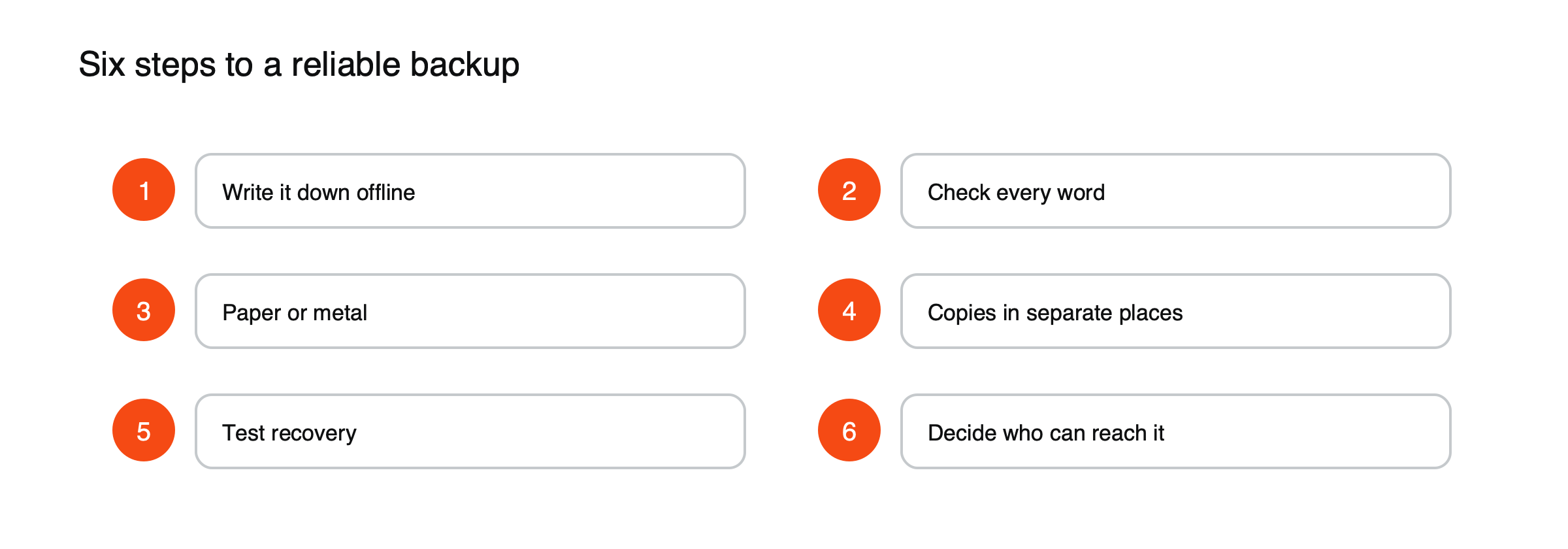
Figure: Six steps to a backup that works when you need it.
For small amounts, paper stored carefully is reasonable. For anything you would hate to lose, metal is worth the modest cost.
Where to keep the copies
Keep at least two copies in different locations, so a single fire, flood or burglary cannot take both. Common pairings are a home safe plus a second trusted place, such as a safe deposit box or the home of a family member you trust. Avoid labeling the copy as a crypto backup; a sheet of numbered words means little to a casual finder. Avoid places shared with many people or that you might lose access to, such as an office drawer.
Testing recovery without risk
A backup you have not tested may not work. With only a small balance in the wallet:
- Reset the device, or use a second compatible wallet.
- Restore from your written copy, typing the words in order.
- Confirm that the same receiving addresses appear as before.
- Only then move larger amounts into the wallet.
If the restored wallet shows different addresses or rejects the phrase, a word or its order is wrong. Find the mistake now, while the original device still works.
Three example setups
- Learning with a small amount: one paper copy at home in a sealed envelope, one more with a trusted family member, recovery tested once.
- Meaningful savings: two metal backups in separate locations, a hardware wallet, recovery tested, and a plan for who can reach the backups if you cannot.
- Large holdings: a passphrase stored separately from the words, or a multisig wallet so that no single backup can move funds. See what a multisig wallet is.
Passphrases and multisig for larger amounts
A passphrase, sometimes called a “25th word,” creates a separate wallet that the written words alone cannot open. It protects you if someone finds your backup, but it must be backed up too, and kept apart from the words; forget it and the funds are gone. Multisig spreads control across several keys, often held in different places, so no single backup is enough to spend. Both add complexity, which is a risk of its own, so they make sense when the amount justifies the extra care.
Decide who can reach it
Think about what happens if you are unable to access your funds. Someone you trust may need to know that a backup exists and where, without being able to use it alone. See how to plan for crypto inheritance. A short written note, kept with your important documents, explaining that the backup exists and how it is organized can save your family weeks of uncertainty. It should never contain the words themselves, only enough to guide a trusted person to the right place and the right help. Store that note separately from the backup itself, and update it whenever the setup changes in any way.
Keep the backup away from the device
Storing your written phrase in the same box as your hardware wallet defeats much of the point. Anyone who takes the box gets both the device and the means to restore it elsewhere, without needing your PIN. Keep the backup and the device in different places, so losing one does not expose the other.
If a copy goes missing
If you cannot find a copy, assume someone else might have it. Do not wait to see whether funds move. Set up a new wallet with a fresh phrase, back that phrase up properly, test it, then transfer everything from the old wallet. The cost of a few transaction fees is small compared with the risk of leaving funds behind a phrase you no longer control.
Review it once a year
Check that each copy is still where you left it, still readable and still matches your current wallet. Moves, renovations and changes in who you trust are all reasons to revisit the setup. If you suspect a copy has been seen by someone else, create a new wallet and move your funds rather than simply hiding the old backup better.
For what to avoid, read seed phrase mistakes that lead to lost funds. For the basics, see what a seed phrase is and what a crypto wallet is.
This article is educational content and does not constitute financial, investment, legal or tax advice. Digital assets are volatile and you may lose the amount you invest.
Sources
- Twelve Words That Hold Every Bitcoin You Own (offline only; fireproof metal backup; verify recovery once) — txid.uk
- Seed Phrase (write on paper or metal; verify the backup) — LearnBitcoin
- What are recovery words? (never store digitally; physical backup; passphrase) — BitBox support
- BIP-39: Mnemonic code for generating deterministic keys (first four letters identify each word in the English list) — Bitcoin Improvement Proposals, GitHub