
What Is Yield Farming?
Yield farming means moving crypto between DeFi protocols to collect fees and token rewards. How it started in 2020, how it works and why returns often fade.
Yield farming means putting crypto to work in DeFi protocols, as a lender, liquidity provider or staker, to collect fees and token rewards, often moving between protocols for the best offer. It took off in June 2020 when Compound began giving out COMP. Much of the return usually comes from new tokens that can fall quickly.
How yield farming works
- Deposit tokens into a protocol: a lending pool, a liquidity pool or a staking contract.
- Earn the base return, such as interest from borrowers or trading fees.
- Earn reward tokens that the protocol hands out to attract deposits, a practice called liquidity mining.
- Sell, keep or redeposit the rewards, sometimes into another protocol to stack returns.
Some farmers also borrow against their deposits to deposit more, increasing both rewards and risk.
How it started
Compound began distributing COMP to lenders and borrowers on June 15, 2020. Within days it had become the largest DeFi protocol by deposits, and COMP reached an all-time high of $373 on June 21 before falling to about $215 by the end of the month. Other protocols copied the model, and the period became known as «DeFi Summer.» Total value locked in DeFi reached around $10 billion by the end of September 2020.
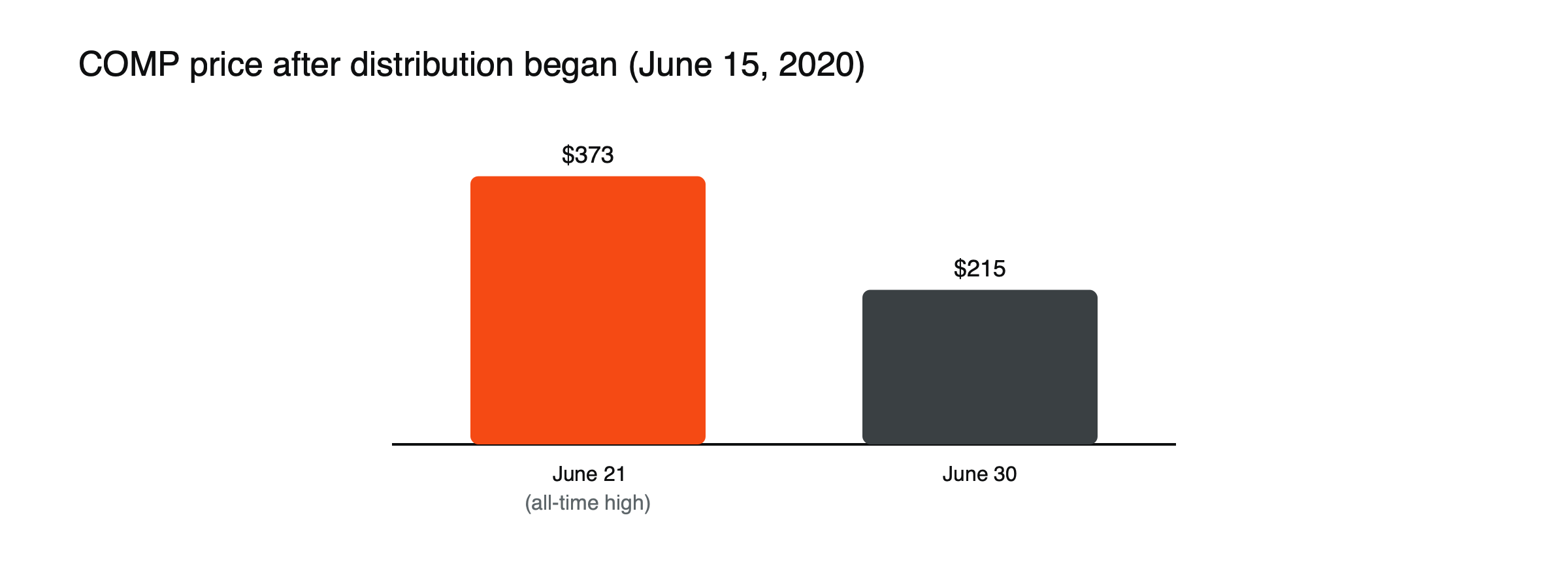
Figure: COMP’s price within two weeks of the first liquidity mining program. Source: CoinDesk, June 30, 2020.
A farm’s return, broken down
Suppose a liquidity pool advertises a 40% annual return: 5% from trading fees and 35% from reward tokens, valued at today’s price. If the reward token’s price halves over the following months, the token part of the return falls to about 17.5%, and the total to about 22.5%. (Illustrative figures.) If the pool’s tokens also move apart in price, impermanent loss can take a further bite. The 5% from fees is the part that comes from real activity; the rest depends on a token whose price is often falling as farmers sell it.
Why advertised returns fade
Reward tokens are newly created. As more are issued and farmers sell them, their price tends to fall, and the yield falls with it. When rewards end, deposits often leave. A return that depends mostly on a protocol’s own token is very different from one paid by borrowers or traders. Our explainer on where DeFi yield comes from separates the two.
A practical rule many experienced farmers follow is to measure results in the asset they started with. If you deposited stablecoins, count your gains in stablecoins after selling rewards and paying fees, not in reward tokens valued at their peak. That single habit cuts through most of the optimism built into advertised yields and shows what a farm actually paid over the full period.
Vaults and aggregators
Yield aggregators automate farming. Users deposit into a vault, and the vault’s strategy moves funds between protocols, claims rewards, sells them and reinvests the proceeds. This saves time and network fees, especially for smaller deposits, but adds another layer of smart-contract risk and a fee for the service. A vault is only as safe as every protocol its strategy touches.
Points programs
From around 2023, many protocols replaced immediate token rewards with points, which users earned for deposits and activity and which might later convert into tokens. Points let projects attract deposits before launching a token, but they leave users uncertain about what their rewards will be worth, or whether a token will appear at all. Many points programs ended with airdrops smaller than farmers expected, and selling pressure once the tokens arrived.
Farming compared with simple staking
Staking a major asset to help secure a network usually pays a modest, relatively stable return funded by network rewards and fees. Yield farming can pay much more, but much of that extra comes from newly issued tokens and from taking on additional risks. For many people, the simpler option delivers a better result after costs, risks and time are counted. See what staking is in crypto.
Signs a farm cannot last
- Rewards far larger than fees, so almost all of the return comes from new tokens.
- A reward token with little use beyond being farmed and sold.
- Most of the token supply held by insiders, who can sell into farmers’ buying.
- Deposits that jump when rewards start and fall when they are cut, a pattern often called mercenary capital.
- Very short or open-ended programs with no clear plan for what happens when rewards end.
Farms showing several of these signs can still pay well for a while, but the timing of exit becomes the main source of profit or loss.
Risks to know
- Reward tokens losing value, sometimes faster than they are earned.
- Impermanent loss for liquidity providers. See what impermanent loss is.
- Smart contract risk, multiplied when funds pass through several protocols.
- Liquidation when farming with borrowed funds.
- Scams: new farms with very high advertised returns are a common setup for rug pulls.
- Gas costs and taxes on frequent moves and rewards.
Before you farm, ask what pays the return, how much comes from the protocol’s own token, who holds that token’s supply, how long the program lasts, and what has been audited. If you cannot identify where the money comes from, treat the return as a risk, not an income.
For the bigger picture, read what DeFi is. For related income products, see what staking is in crypto.
This article is educational content and does not constitute financial, investment, legal or tax advice. Digital assets are volatile and you may lose the amount you invest.
Frequently asked questions
Is the APY shown on a farm guaranteed?
No. It is usually calculated from current rewards and token prices and assumes they stay the same. Both tend to change, often quickly.
Do I pay tax on farming rewards?
In many countries, reward tokens count as income when received, and selling or swapping them later can create a separate gain or loss. Frequent farming creates many taxable events, so keeping records from the start matters. See how to keep records of your crypto transactions.
Sources
- Compound Changes COMP Distribution Rules (distribution began June 15, 2020; COMP high of $373 on June 21; $215 by June 30) — CoinDesk via Nasdaq, June 2020
- Inside Yield Farming (Compound became the largest DeFi project days after COMP distribution) — DeFi Prime, June 2020
- SoK: Yield Aggregators in DeFi (TVL around $10 billion by end of September 2020) — arXiv
- What Is Yield Farming? (liquidity mining definition; COMP popularized it) — Chainlink