
Leverage Mistakes That Drain New CFD Accounts
Two traders, one losing idea: how maximum leverage, sizing by margin, no stop, adding to losers, financing and weekend gaps turn a 1% loss into 51%.
The CFD leverage mistakes that drain new accounts are using the maximum leverage available, sizing positions by free margin instead of risk, trading without a stop-loss, adding to losing positions, ignoring overnight financing and holding through major events. Each one turns an ordinary losing trade into a much larger loss.
Two traders, the same market
The clearest way to see what leverage mistakes cost is to follow two traders through the same price moves. Both open accounts with $10,000, both expect EUR/USD to rise from 1.1000, and both are wrong. The only difference is how they use leverage. (Illustrative scenario; one lot moves about $10 per pip.)
Decision one: how much to trade
Trader A opens 1 standard lot, a position worth about $110,000, because the platform allows it and the margin of about $3,667 fits in the account. Effective leverage is about 11 to 1.
Trader B decides first that one trade should not cost more than 1% of the account, $100, then works out the size from the stop. The result is 0.2 lots, worth about $22,000, effective leverage about 2.2 to 1.
The maximum leverage on offer, 30 to 1 for a major pair under EU retail rules, played no part in Trader B’s decision. See what leverage is in CFD trading.
Decision two: where to get out
Trader A sets no stop, planning to watch the trade. Trader B places a stop 50 pips below entry, where the idea is clearly wrong.
The pair falls 100 pips over two days. Trader B is stopped out halfway down for a loss of about $100. Trader A is down about $1,000, and the account’s margin level has fallen to around 245%. Nothing has forced Trader A out yet, which makes holding feel reasonable. See how stop-loss orders work.
Decision three: what to do with a loser
Trader A decides the price is now a bargain and buys another lot at 1.0900, doubling the position and the margin used, to about $7,300. Trader B, already out, waits for a new setup.
The pair falls a further 80 pips. Trader A’s two lots lose about $1,600 more. Equity is about $7,400, and the margin level is barely above 100%: a margin call. Adding to a losing trade with leverage did not lower the risk; it doubled the speed of the losses.
Decision four: the cost of waiting
Hoping for a rebound, Trader A holds the two lots for ten nights. At an illustrative $7 per lot per night, financing takes about $140, and the margin level slips below 100%. On a large leveraged position, even small daily charges move an account that has no buffer left. See how to calculate overnight financing.
Decision five: holding through the weekend
A major announcement is due over the weekend. Trader A keeps both lots open. On Monday the pair opens 120 pips lower, a gap that costs about $2,400 at once. Equity falls to roughly $4,860, a margin level of about 67%, only a short distance from the 50% stop-out. See why prices gap over weekends.
Trader B had closed out long before and avoided opening a new position ahead of the announcement.
Where they ended up
| Trader A | Trader B | |
|---|---|---|
| Starting balance | $10,000 | $10,000 |
| Effective leverage on entry | About 11:1 | About 2.2:1 |
| Stop-loss | None | 50 pips |
| Added to the loser | Yes, one more lot | No |
| Nights held | Ten, plus a weekend | None after the stop |
| Approximate account value | About $4,860 | About $9,900 |
| Loss | About 51% | About 1% |
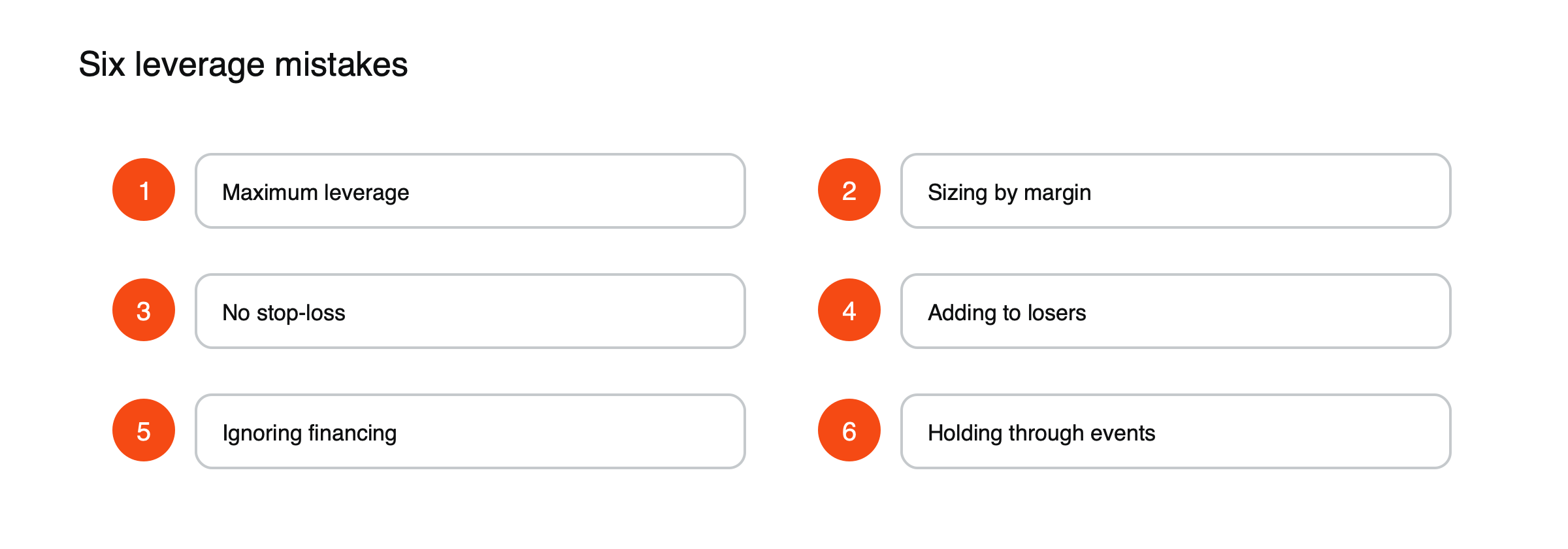
Figure: Six habits that drain leveraged accounts.
Both traders had the same wrong idea. One lost a few minutes of disappointment; the other lost half the account and is a small move away from being closed out.
Why each mistake felt reasonable
None of Trader A’s choices looked reckless in the moment. Using a full lot felt normal because the platform accepted the order and the margin fitted. Skipping a stop felt sensible because the plan was to watch the trade. Adding at a lower price felt like buying a bargain. Holding through financing and the weekend felt like patience. Each decision was made after the previous one had already gone wrong, under the pressure of an open loss, which is exactly when judgment is weakest.
What the warnings were saying
Trader A’s account sent clear signals along the way. After the first 100-pip fall, the margin level dropped from over 270% to around 245%, still comfortable but falling fast. After adding the second lot, it collapsed to barely above 100%, and the platform issued a margin call and blocked new positions. After ten nights of financing, it slipped just below 100%. Each signal was a chance to reduce the position at a smaller loss than the next one. Treating a falling margin level as information, rather than as noise to wait out, is one of the simplest habits that separates accounts that survive from those that do not. On most platforms these alerts can be sent to a phone, and setting them at levels well above the margin call gives time to act while choices are still easy.
Rules that would have changed the outcome
- Decide the maximum loss per trade before choosing a position size.
- Place a stop with every entry, at the level where the idea is wrong.
- Never add to a position that is losing.
- Estimate financing before holding for more than a few nights.
- Reduce or close positions before scheduled weekend or overnight events.
Any one of these would have cut Trader A’s loss sharply; all of them together describe how Trader B traded.
After the loss
The most dangerous moment can come after a large loss, when the urge to win it back quickly leads to even larger positions. A sensible response is the opposite: smaller size, a pause before the next trade and a review of what went wrong while the details are still fresh.
What the regulators saw
These patterns are not hypothetical. When European regulators restricted CFDs in 2018, they named excessive leverage as the main problem and noted that between 74% and 89% of retail accounts typically lost money. In Australia, the regulator found that retail clients of 13 CFD issuers lost more than $774 million in just five weeks during the market turmoil of 2020, before introducing its own leverage limits.
The common thread
Leverage does not change whether a trade idea is good; it changes how fast a bad one hurts, and how many bad decisions an account can survive. Trader A made five choices that each looked defensible in the moment. Trader B made one decision at the start, how much to risk, and let the rest follow from it. See what happens in a margin call and a stop-out and how to size a CFD position using risk per trade.
Leverage, margin and cost figures in this article are example values for illustration. Actual terms depend on the provider, the instrument and the rules in your country.
This article is educational content and does not constitute financial, investment, legal or tax advice. Digital assets are volatile and you may lose the amount you invest.
Sources
- ESMA agrees to restrict CFDs (excessive leverage; 74%–89% of retail accounts lose money) — ESMA
- ASIC product intervention order (retail clients of 13 CFD issuers lost more than $774 million in five weeks of 2020) — Mondo Visione
- Swiss National Bank crisis (stops not filled; negative balances) — investingLive