
What 2022 Taught Investors About Diversification
In 2022 stocks, bonds, real estate and bitcoin fell together while commodities rose. What happened, why traditional diversification failed and the lessons.
2022 diversification lessons start with one fact: almost everything fell together. US stocks lost about 18%, global stocks about 20%, global bonds about 16%, real estate about 24% and bitcoin about 64%, while broad commodities rose about 18%. A standard 60/40 portfolio had its worst year since 1937. Inflation, not recession, was the common enemy.
Timeline
- Early 2022: inflation runs at multi-decade highs; the Federal Reserve begins raising rates in March.
- February–spring: Russia’s invasion of Ukraine sends energy and food prices higher.
- Mid-2022: stocks enter a bear market; bond yields climb; crypto lenders fail.
- September–October: the dollar index hits a 20-year high; stocks and bonds have fallen together for months.
- End of year: the main US bond index records its worst year on record.
Why diversification failed
Rising inflation pushed interest rates up, which hurt both bonds and stocks at once, turning their usual negative correlation positive. Assets that had been bought partly because rates were low, such as long-dated bonds, growth stocks and crypto, were hit hardest. See why the stock-bond correlation flipped after 2021.
A 60/40 portfolio in 2022, illustrated
A portfolio of 60% US shares and 40% US bonds, with shares down about 18% and bonds down about 13%, would have lost roughly 16% to 17% for the year. (Illustrative calculation using the sourced asset returns.) In a typical year when shares fall, bonds would have offset part of the loss. In 2022, they added to it, which is why the year was the worst for this mix since 1937.
What worked
Broad commodities rose about 18%, energy in particular; cash held its value in nominal terms; gold was roughly flat despite a strong dollar.
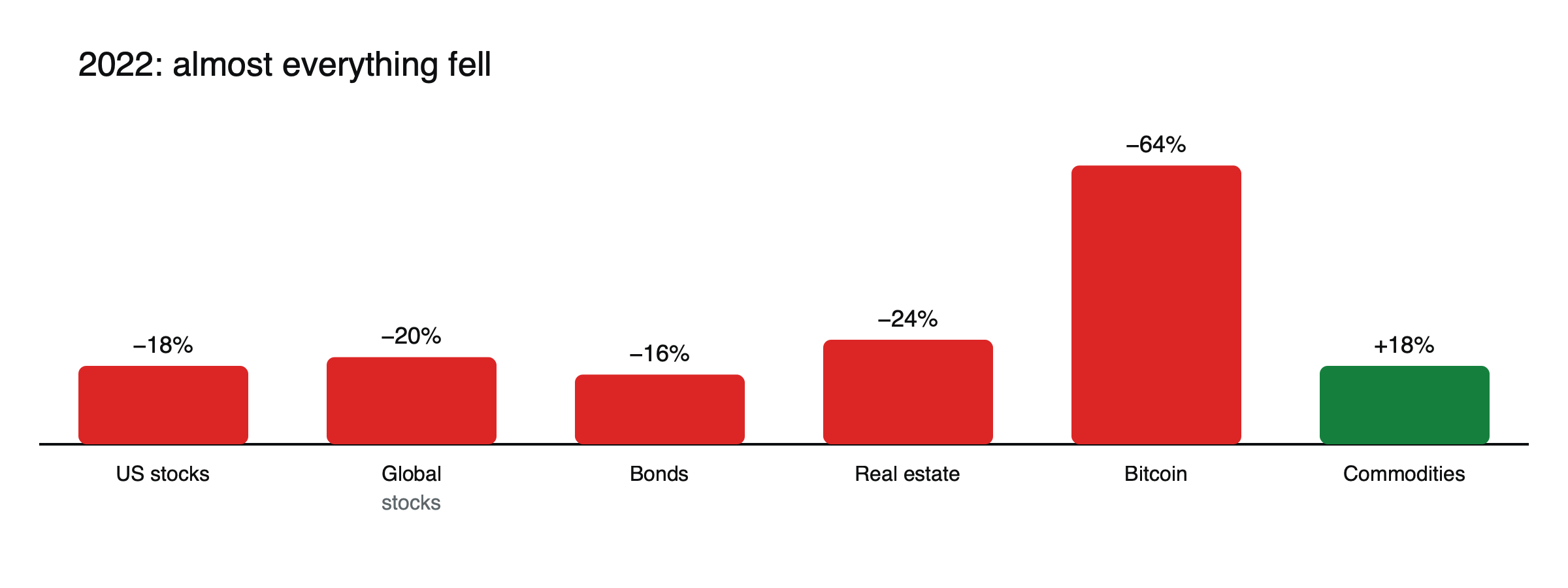
Figure: 2022 total returns by asset class. Source: WisdomTree.
The dollar as a winner
For investors based in the United States, holding cash in dollars was one of the few ways to avoid losses, and for investors abroad, holding dollar assets gained from the dollar’s rise. The dollar index reached about 114 in September, its highest in two decades, cushioning foreign investors in US assets even as those assets fell.
Strategies that thrived
Trend-following strategies, which buy rising markets and sell falling ones across many assets, generally had a strong year, profiting from falling bonds, rising commodities and a rising dollar. Their success highlighted the value of strategies that can go short as well as long.
What changed for portfolios
The year pushed many investors to rethink portfolio construction. Some added commodities, inflation-linked bonds or trend-following strategies; others shortened bond maturities. Higher bond yields after 2022 also meant that bonds offered far more income than before, improving their ability to cushion future losses. See stocks vs bonds when inflation is falling.
Lessons
- Diversify across inflation regimes, not just asset labels.
- Bonds hedge growth scares, not necessarily inflation shocks.
- Starting valuations matter: expensive stocks and bonds both had further to fall.
- Crypto behaved as a risk asset, not a hedge.
See commodities vs stocks during inflationary periods and stocks, bonds and commodities across the rate cycle.
2022 at a glance
| Asset | 2022 return (approx.) |
|---|---|
| US shares | −18% |
| Global shares | −20% |
| Global bonds | −16% |
| Real estate | −24% |
| Bitcoin | −64% (index) |
| Broad commodities | +18% |
| Gold | About flat |
Why it was so unusual
For two decades, inflation had been low and stable, and the main threat to markets was weak growth, in which bonds rally as shares fall. In 2022, inflation was the threat, and the response, rapid rate hikes, hurt almost every asset priced off interest rates. Investors who had built portfolios around the assumptions of the previous twenty years found those assumptions no longer held.
Lessons for traders
Leveraged positions that relied on low rates and rising asset prices suffered, while traders who adapted to the new regime, shorting bonds or trading commodities and the dollar, found opportunities. The year showed the value of recognizing a change in regime early rather than assuming the old relationships would return. See why correlations go to one in a crisis.
Crypto in 2022
Crypto suffered one of its worst years. As rates rose, speculative demand faded, and the collapse of the Terra stablecoin in May and the FTX exchange in November triggered further sharp falls and failures at crypto lenders. A broad bitcoin index fell about 64% for the year. Investors who had held crypto partly as a diversifier found it fell more than technology shares. See Bitcoin, gold and the dollar under market stress.
Growth versus value
Within share markets, 2022 punished growth companies, whose valuations depended on low rates and distant profits, far more than value companies with strong current earnings. Energy shares, boosted by high oil and gas prices, were among the few winners. The gap showed that diversification within share markets, across styles and sectors, mattered as much as diversification across asset classes. See growth vs value stocks.
The bond market’s worst year
The main US bond index had the worst year in its history, as the 10-year Treasury yield rose from about 1.5% to about 4.2%. Long-dated bonds fell far more than short-dated ones, and inflation-linked bonds also fell as real yields rose sharply. Investors learned that bonds bought at very low yields offered little cushion and much downside.
Real estate
Listed real estate fell about 24% as higher rates raised financing costs and reduced the value of property income. Real estate, sometimes seen as an inflation hedge, behaved more like a rate-sensitive asset in a rapid tightening cycle.
Common misreadings
- Concluding that diversification no longer works.
- Assuming the next crisis will look like 2022.
Central banks drove everything
The Federal Reserve raised its policy rate rapidly through 2022, from near zero in March to over 4% by December, and other central banks followed. Because almost every asset is valued partly against interest rates, the speed of tightening pulled them all down together. The common driver, rather than any weakness in diversification itself, explains why so many assets fell at once.
Rebalancing through the year
Investors who rebalanced during 2022, selling commodities after their rally and buying bonds or shares after their falls, ended up buying assets that kept falling for much of the year, but positioned themselves for the recoveries that followed. Rebalancing is not a protection against a bad year, but it keeps a portfolio’s risk in line with plans and can improve long-term outcomes.
Lessons for building portfolios now
Many investors now consider several scenarios when building portfolios: growth scares, inflation shocks and liquidity crises. Holding some assets that do well in each, such as long government bonds for growth scares, commodities or inflation-linked bonds for inflation shocks, and cash for liquidity crises, gives a sturdier mix than relying on bonds alone.
Correlations through the year
The stock-bond correlation, negative for most of the previous two decades, rose to about +0.5 in 2022. Shares and bonds fell together month after month, with only brief periods in which bonds rallied as shares fell. The shift was not a one-day panic, like March 2020, but a persistent change lasting most of the year, which made it harder for investors to wait it out.
Signs of a repeat
- Inflation running well above central bank targets
- Central banks raising rates faster than markets expect
- Bond yields starting from very low levels
- Share valuations stretched by years of low rates
- A strong dollar tightening global financial conditions
When several of these appear together, the risk of shares and bonds falling at the same time rises, and the case for other diversifiers, such as commodities, cash and short-dated bonds, becomes stronger. Monitoring these signs does not predict the next shock, but it helps investors judge how much their portfolios rely on bonds to cushion share losses.
Inflation-linked bonds in 2022
Inflation-linked bonds, often seen as natural protection, also fell in 2022, because rising real yields outweighed the boost from higher inflation. Short-dated inflation-linked bonds held up better than long-dated ones. The lesson was that inflation protection and rate protection are different things. Investors who wanted protection against both inflation and rising rates needed short-dated inflation-linked bonds, commodities or cash, rather than long-dated bonds of any kind, which many portfolios had long relied on.
Frequently asked questions
Will bonds and shares fall together again?
They can, whenever inflation becomes the main risk. When growth is the bigger worry, bonds have usually cushioned shares.
Was cash a good investment in 2022?
It held its nominal value and yields rose, but high inflation still eroded its purchasing power.
This article is educational content and does not constitute financial, investment, legal or tax advice. Digital assets are volatile and you may lose the amount you invest.
Sources
- Commodities are more than just an inflation hedge (2022: US equities −18%, global equities −20%, bonds −16%, bitcoin index −64%, real estate −24%; commodities +18%; gold about flat) — WisdomTree
- The death of the 60/40 (worst year since 1937) — Masterworks Research, June 2026
- Long Live the 60/40 Portfolio (2022 worst year in the bond index’s history; expensive starting valuations) — Advisor Perspectives, May 2023
- The Dollar Index (DXY 20-year high in September 2022) — BIT Knowledge Hub
- Why ordinary investors got hit so hard in 2022 (10-year yield from about 1.5% to about 4.2%) — Yahoo Finance via AOL
- Stock-Bond Return Correlation Flips Positive (+0.52 in 2022) — Voronoi