
Forex Myths That Cost Beginners Money
Fourteen forex myths fact-checked and rated, from easy money and high leverage to guaranteed stops, gap-proof majors and brokers who always win trades.

Common forex myths include that forex is easy money, that high leverage is a benefit, that stops guarantee your exit price and that major pairs cannot gap. Checked against regulators’ data and past market events, most of these claims turn out to be false or only partly true, and believing them is expensive.
How the claims are rated
Each claim below is checked against evidence and given one of four verdicts:
| Verdict | Meaning |
|---|---|
| False | The evidence contradicts the claim |
| Mostly false | A small grain of truth, but misleading as stated |
| Half true | True in some conditions, false in others |
| Mostly true | Broadly accurate, with important caveats |
Claim: “Forex is easy money”
Verdict: False. When European regulators restricted CFDs for retail clients, they noted that between 74% and 89% of retail accounts typically lost money. Professional traders with research teams and the fastest technology compete in the same market. Consistent profits are possible but rare, and they come from cost control and risk management more than from finding easy opportunities.
Claim: “High leverage is a feature you should use”
Verdict: False. Leverage multiplies losses as much as gains. At 30 to 1, a move of about 3.3% against a position wipes out its margin, and major pairs can move that much in days. Retail leverage caps exist precisely because of the damage high leverage caused. The maximum allowed is a ceiling, not a recommendation. See how leverage changes the math on a forex trade.
Claim: “A stop-loss guarantees my exit price”
Verdict: False. An ordinary stop becomes a market order once triggered and fills at the next available price. In normal conditions that is close to the stop; in a gap it can be far away. When the Swiss National Bank removed its euro floor in January 2015, many stops were filled at levels far beyond where they had been placed. Only guaranteed stops, offered by some providers for a fee, fill at the exact level. See what happened when the Swiss franc floor was removed.
Claim: “Major pairs are too liquid to gap”
Verdict: False. Liquidity is deep most of the time, not all of the time. In October 2016, sterling fell about 6% against the dollar in two minutes during thin early Asian trading. Major pairs also gap at weekend opens and around central bank surprises. Liquidity reduces costs; it does not remove jump risk. See what caused the 2016 pound flash crash.
Claim: “More trades mean more profit”
Verdict: False. Every trade pays the spread and sometimes a commission. A trader making ten round trips a day on one lot of EUR/USD with a 1-pip spread pays about $100 a day in spreads alone. Frequent trading multiplies costs faster than it multiplies good opportunities, and studies of active retail traders have repeatedly linked high turnover with poorer results. See how much the spread costs on a forex trade.
Claim: “Indicators can predict where price is going”
Verdict: Mostly false. Indicators summarize past prices. They can help organize decisions, for example by showing whether a pair is trending or ranging, but they do not reveal the future. Many indicators use the same data, so several agreeing is often one signal counted several times. See technical analysis mistakes crypto traders make, which apply equally to currencies.
Claim: “Forex is a zero-sum game”
Verdict: Mostly true. Among speculators, one trader’s gain on a currency move is broadly another’s loss, before costs. After spreads, commissions and rollover, the total for speculators as a group is negative. The caveat is that many market participants, such as companies hedging payments, are not trying to profit from currency moves at all, so the market is not purely a contest between speculators.
Claim: “The best time to trade is always the London–New York overlap”
Verdict: Half true. For major pairs involving the euro, pound and dollar, the overlap usually brings the tightest spreads and most liquidity. For yen, Australian and New Zealand dollar pairs, the Asian session can be just as important. The best time depends on the pair and on when its key data are released. See forex trading sessions.
Claim: “You need a lot of money to start”
Verdict: False. Brokers offer micro lots of 1,000 units, where a pip on EUR/USD is worth about 10 cents. The more useful question is how much you can afford to lose while learning, since small accounts tempt traders to use excessive leverage to make results feel meaningful.
Claim: “Your broker always wins when you lose”
Verdict: Half true. Some brokers act as market makers and take the other side of client trades, often hedging their overall exposure; others pass orders to external liquidity providers and earn from spreads or commissions. Conflicts of interest exist in some models, which is why regulated brokers must have execution policies and treat clients fairly. Checking a broker’s regulator and execution policy matters more than assuming either the best or the worst. See how CFD prices track the underlying market.
Claim: “Weekends are safe because the market is closed”
Verdict: False. Positions held over a weekend remain exposed to news that arrives while trading is paused. Elections, central bank announcements and geopolitical events can move prices sharply by the time markets reopen on Sunday evening, and stops fill at the opening price rather than their set level. Some brokers also raise margin requirements before weekends. See why prices gap over weekends.
Claim: “Trading the news is the fastest way to profit”
Verdict: Mostly false. News releases do bring large moves, but they also bring the widest spreads, the most slippage and the most frequent reversals of the first move. Professional firms react within milliseconds. Retail traders who try to beat them on speed usually pay more in costs than they gain. Waiting for spreads to settle, or staying out, is often the better choice. See how to prepare for high-impact news.
Claim: “Demo results will carry over to live trading”
Verdict: Half true. A demo account is useful for learning platforms, testing rules and practicing routines. But demo fills can be more favorable than live ones, and trading without real money at stake removes the fear and frustration that drive most mistakes. Many traders find their live results worse than their demo results at first, which is why moving to small real positions before full size is a common step.
Claim: “Copying successful traders is a shortcut”
Verdict: Half true. Learning from experienced traders can speed up understanding, and some platforms let clients copy others’ trades automatically. But past results may reflect luck or risks that are not visible, and a strategy that suits one account size and temperament may not suit another. Copying without understanding also means not knowing when to stop. Studying how successful traders manage risk is usually more valuable than copying their entries.
The scorecard
| Claim | Verdict |
|---|---|
| Forex is easy money | False |
| High leverage is a feature | False |
| Stops guarantee the exit price | False |
| Major pairs cannot gap | False |
| More trades, more profit | False |
| Indicators predict the market | Mostly false |
| Forex is zero-sum | Mostly true |
| The overlap is always best | Half true |
| You need a lot of money | False |
| Your broker always wins when you lose | Half true |
| Weekends are safe | False |
| News trading is the fastest route to profit | Mostly false |
| Demo results carry over to live trading | Half true |
| Copying successful traders is a shortcut | Half true |
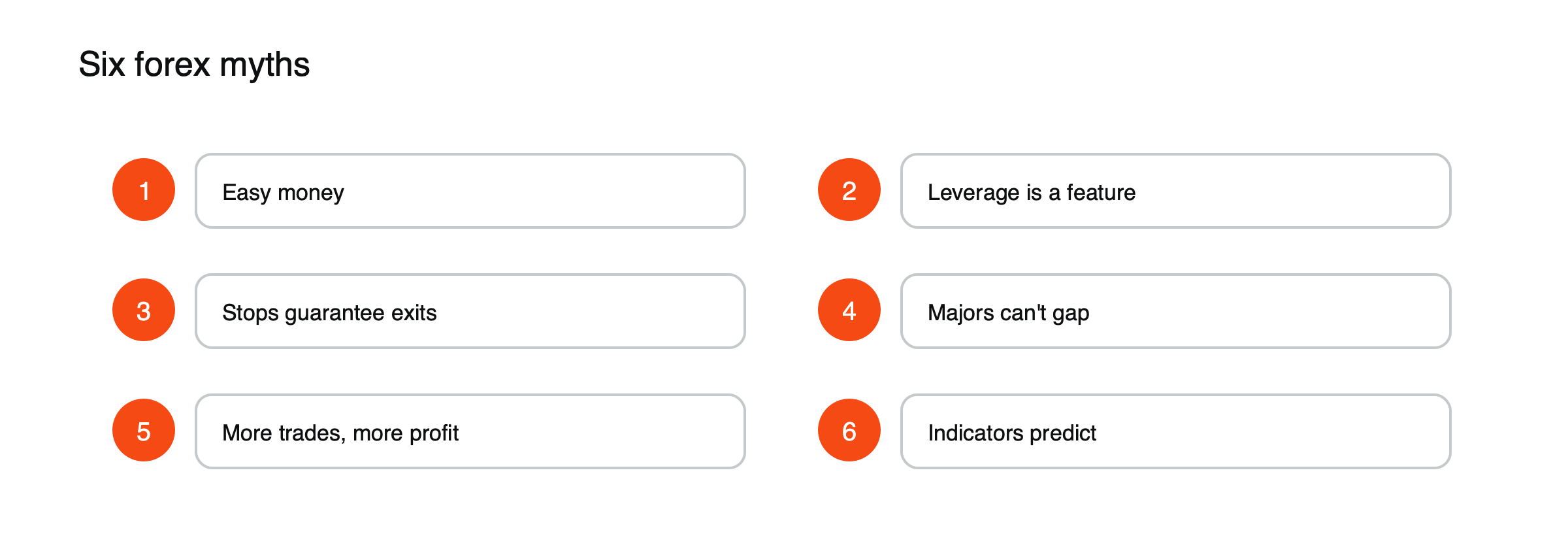
Figure: Six myths that cost beginners money.
What holds up instead
Five of the fourteen claims are at least partly true, but none holds without caveats. The claims that survive checking all point in the same direction: costs matter, leverage cuts both ways, extreme moves happen even in the biggest markets and no tool removes uncertainty. Traders who build their approach on those facts, with modest leverage, sized positions and a written plan, start with a far more realistic picture than those who believe the myths. See how the forex market works and how to build a simple forex trading plan.
This article is educational content and does not constitute financial, investment, legal or tax advice. Digital assets are volatile and you may lose the amount you invest.